Materials
Klashorst started out very traditionally, with oil paint on wood panel. Over the years he used “any material I can get my hands on”: oil paint, but also car paint and spray paint, and plastic (PVC) instead of wood or canvas. He liked the modern feel of it: on PVC the paint stays on top instead of being absorbed, so it keeps its shine.
No style
He described himself as an artist without a style. Most artists, he said, are “one trick ponies” who repeat the same formula to keep collectors happy. Not belonging to the commercial art world meant he was free, “and in the end for me art is about freedom and not success and money.”
Painting is pleasure, but it should also hurt a bit.
Peter Klashorst
Imperfection
In Kunstkannibaal he wrote that a good painting should never be completely in balance. There should be a point of irritation that distracts the eye. Rembrandt, he argued, played with this all the time: there are always unfinished passages that let the viewer complete the work in his own imagination, which is why we still find it interesting after all these centuries.
A dialogue with art history
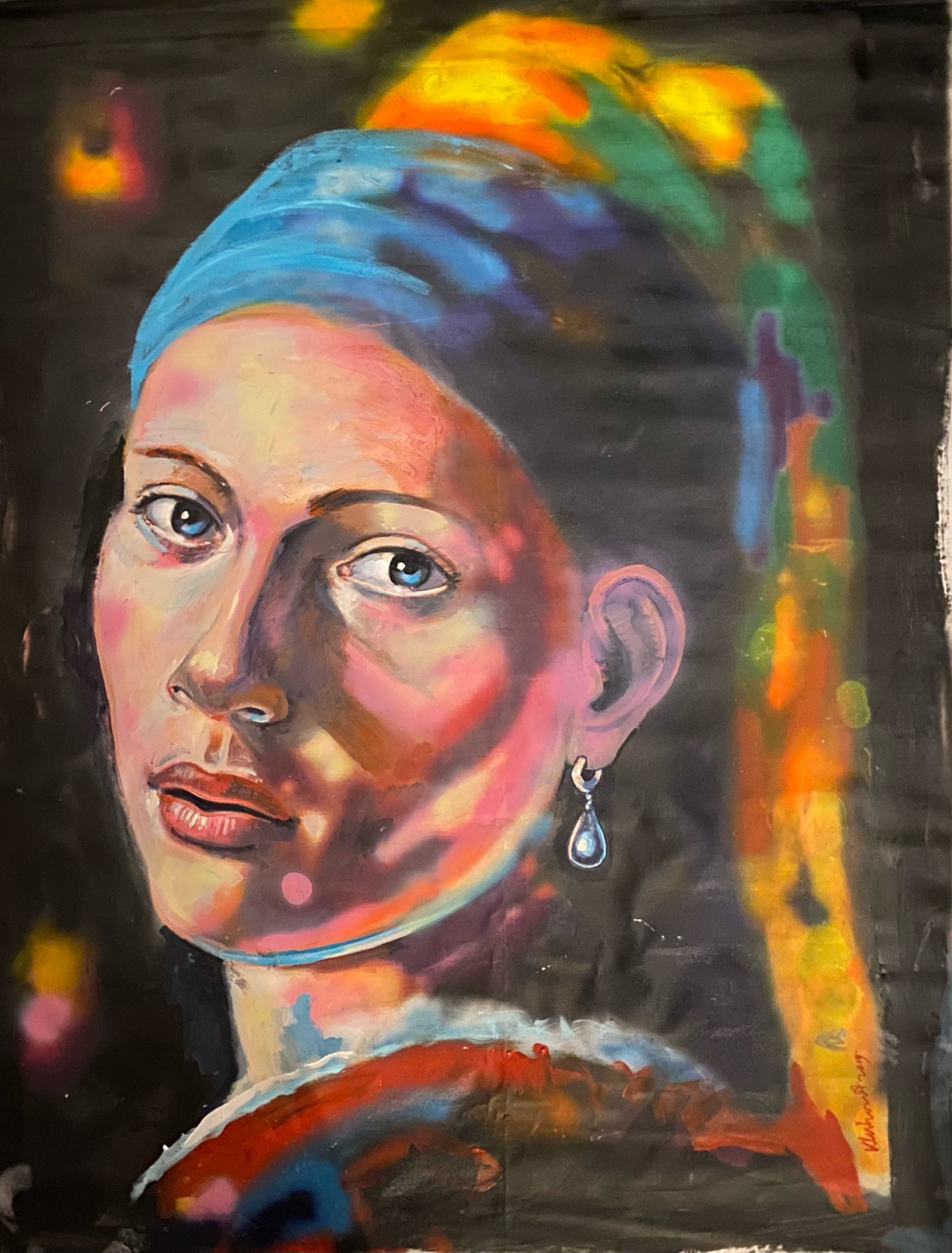
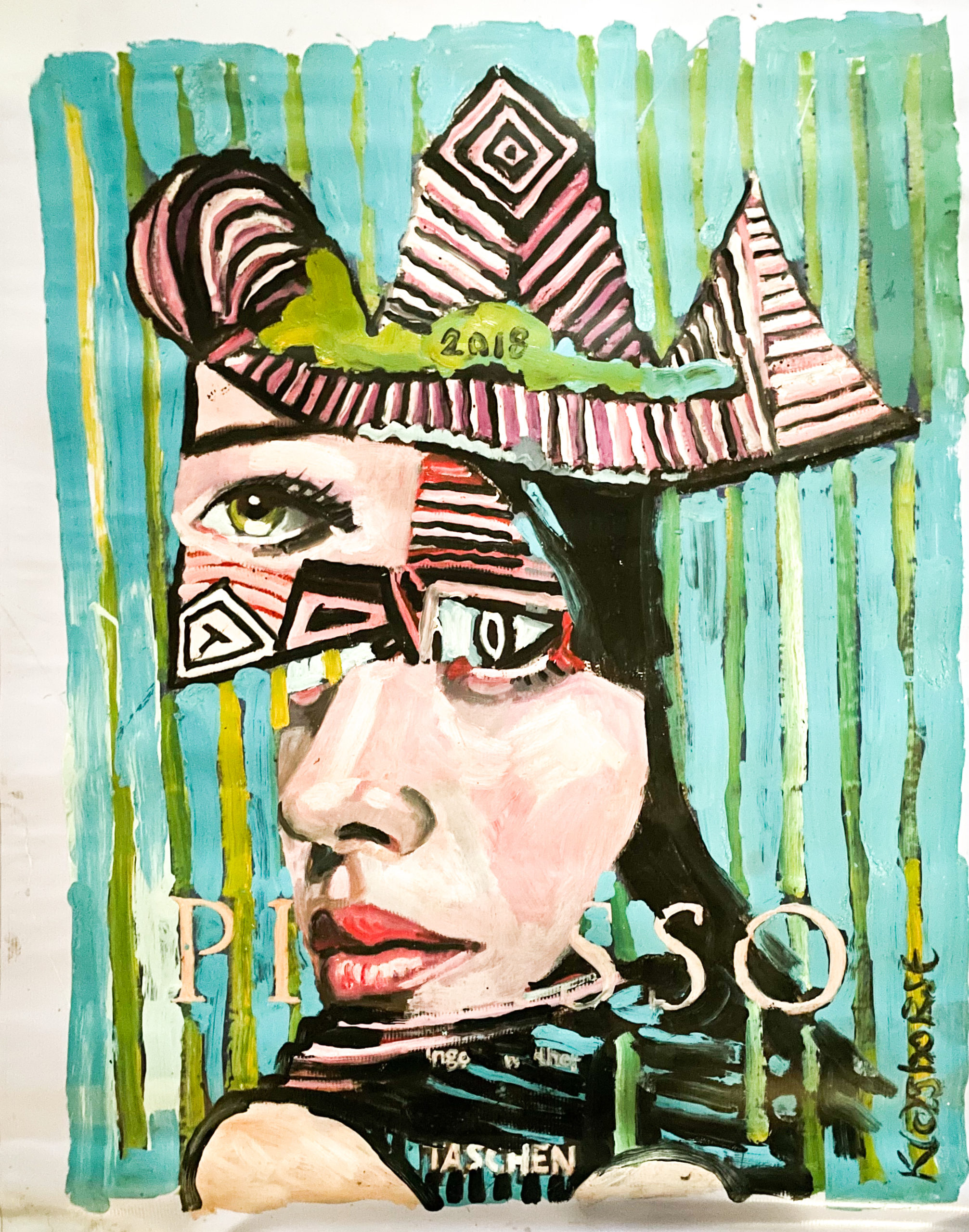
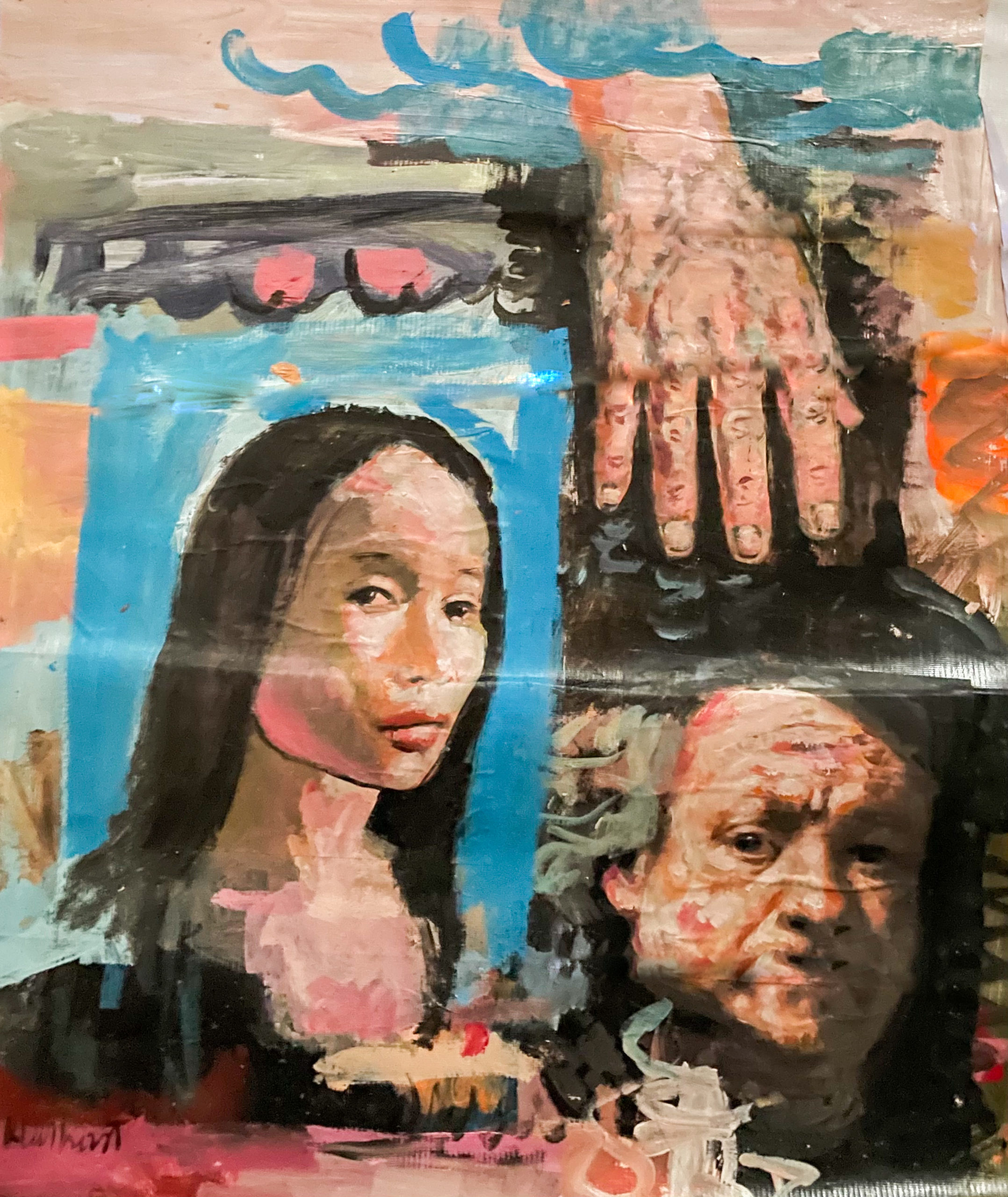
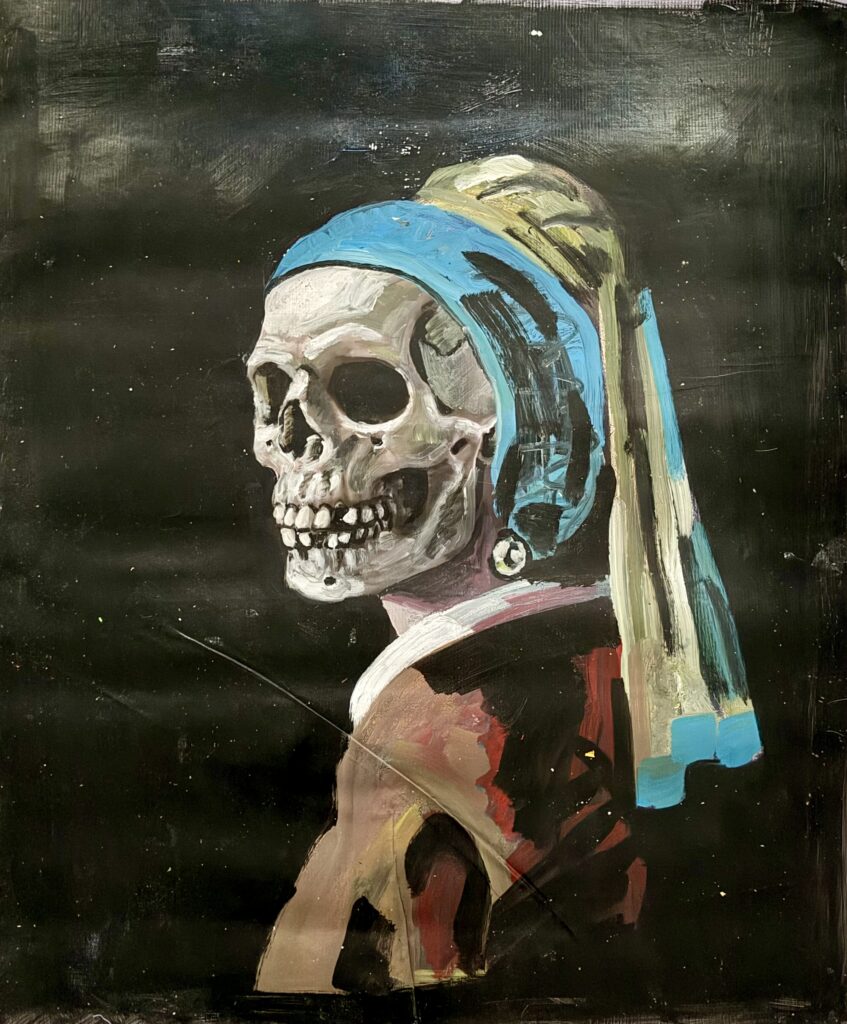
His heroes ranged from Caravaggio and Michelangelo, Picasso and Bacon to the comic artists Carl Barks and Robert Crumb: “I just take the things I like and use it in my own art.” The collection reflects that dialogue: variations on Vermeer’s Girl with a Pearl Earring, Rembrandt studies, a modern Mona Lisa and the “Piclasso” series after Picasso.